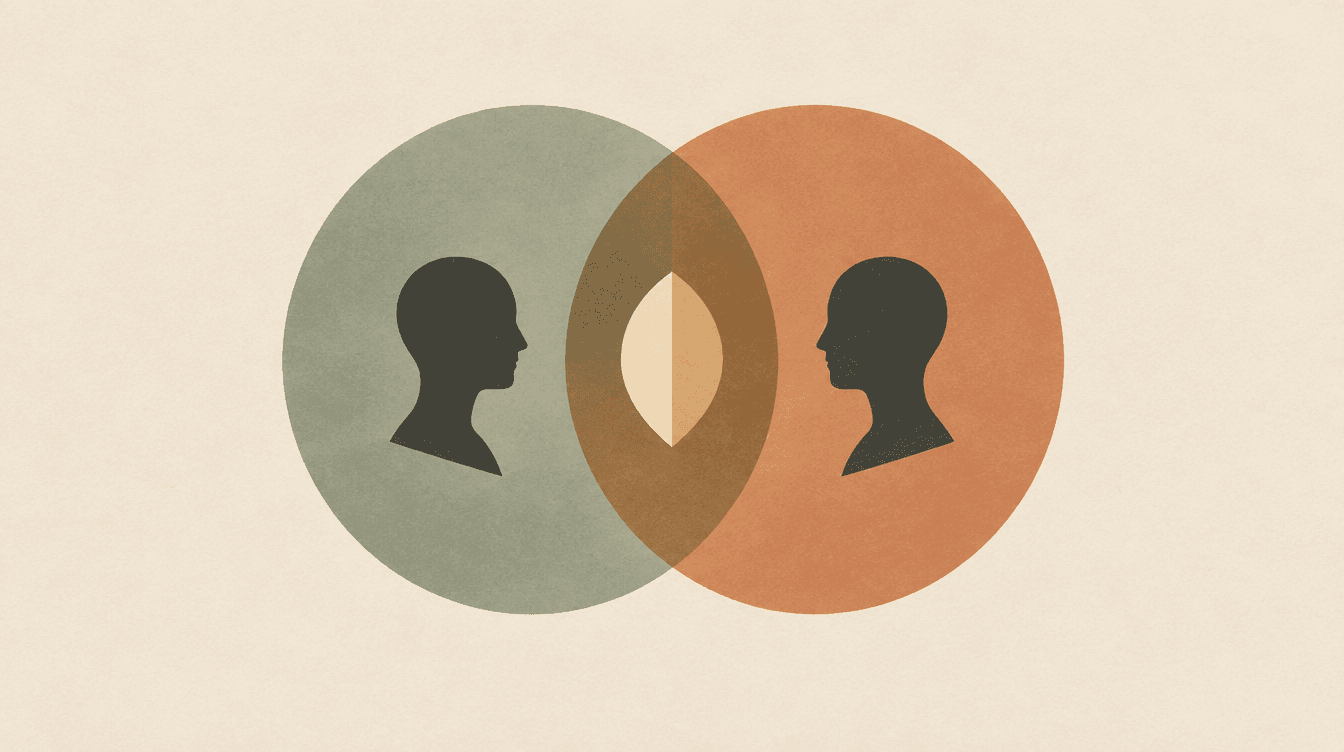
A system is a collective entity consisting of input, output, and movements in between.
Systems thinking is a discipline for seeing wholes. It is a framework for seeing interrelationships rather than things, for seeing patterns of change rather than static snapshots. — Peter Senge
Thinking in systems is a great way to immaculate our perspective on how we see the world and ourselves in it.
You might think that systems thinking is a complex terminology, out of your understanding. The truth is that there has never been a better time to understand it than now. Systems thinking comes in handy when you need to find blind spots. It happens when you shift from linear thinking toward non-linear thinking. Rather than focusing on input and output, you focus on enhancing the processes. Then you try to figure out solutions at the root level so that the output is automated, sturdy, sustainable, and efficient.
Systems are used to compensate for complexity with simplicity. Here is a simplified version of the five fundamentals of systems thinking.
1. Everything is connected: interconnectedness
A system is an arrangement of parts connected and joined together by a web of relationships or networks. This makes a system non-linear. Often, the decisions we make at one point affect other components within the system. Reacting to a problem in one part of the system may have unintended consequences on another component or process.
The best way to study this principle is by considering our ecosystem. In grassland ecosystems, herbivores consume grass, but also feed the soil with their droppings, which allows the grass to grow back and permits stability. Still, this doesn't mean an ecosystem, even a healthy one, is static. Ecosystems are constantly evolving. They are based on dynamic processes that are constantly changing.
2. Dismantle to mantle: synthesis
Synthesis means breaking, collecting, and combining things to have them work together.
Today's problems are often a result of yesterday's solutions.
Consider a motorboat and a bicycle. If we dismantle their parts, take out the bicycle's handle and bell and the boat's engine, and combine them to make a jet ski, we get a whole new system for specialized use.
In systems, smaller components are used to generate another, different system to get a new, less complicated, convenient, sustainable alternative for the same complex system. If you map these systems, keep them side by side, draw interconnected relations between them, and eliminate redundant parts, you can create more sustainable, future-proof, errorless systems.
3. Systems mapping
Systems mapping is used to structure the components of a system. It helps create boundaries that distinguish one component from another. It shows how interactions happen within the systems. It can be represented visually to ease communication and further pass it on.
System maps can be communicated through graphs, mind maps, loop diagrams, and interconnecting maps.
Graphs. Behavior over time.
Mind maps. Branch-out systems where one component is core and the rest emerge out of it.
Causal loop diagrams. Cause-and-effect theory that can be repeated with feedback loops.
Hierarchies. To arrange items above, below, or at the same level.
4. The process of becoming visible: emergence
Emergence is the creation of something new and much more complex that could not have been expected from the visibility of the simpler systems before its creation.
Emergence can be described as small things forming bigger things that have different properties than the sum of their parts. — Kurzgesagt: In a Nutshell
The specialty of emergence is that when a fully functioning system works beyond its core properties with other systems, a newer and complex system is formed. Look at hydrogen and oxygen atoms. Neither of those possesses the ability of wetness. However, when these molecules are combined naturally, it turns into wetness and emerges as water.
Systems combine larger things emerging from smaller parts. Emergence is the natural outcome of system formation.
There is nothing in a caterpillar that tells you it will be a butterfly. — R. Buckminster Fuller
5. Trials and errors: feedback loops
Feedback loops ensure the stable functioning of systems. This process is often continuous and iterative. Feedback loops influence human behavior in our lives, from knowing when to stop eating to how much time you should put into scrolling on social media. They influence almost every aspect of our lives.
Feedback loops are the invisible forces that shape human behavior. — James Clear
There are two types of feedback loops: balancing and reinforcing.
Balancing feedback loops default to equilibrium. If you have a bad habit, a balancing loop can moderate it. This state is good, but not good enough to excel in any field or become a master in any area.
Reinforcing feedback loops, on the other hand, top up on your good or bad habit. They can make your bad habits worse. They can also help you build your good habits and compound them with other good habits. The results here are compounding.
Rapid feedback leads to rapid change. — James Clear
In a nutshell, a feedback loop is a part of the processes that are given to the input, concerning how good or how bad a system's behavior is. If we take care of input, the output takes care of itself.
In short
Understanding systems at a personal level is useful for understanding why things work as they do, and how, by dismantling and synthesizing them, we can transform an older system into a completely new, greater one.
The world is headed toward globalization. It is important to systematize locally to impact globally.
Originally published on Medium's ILLUMINATION, September 2020.
Follow me to keep in touch
Where I share my creative journey, design experiments, and industry thoughts.